Daily message / devotional
THE WRATH OF GOD
Daily message / devotional
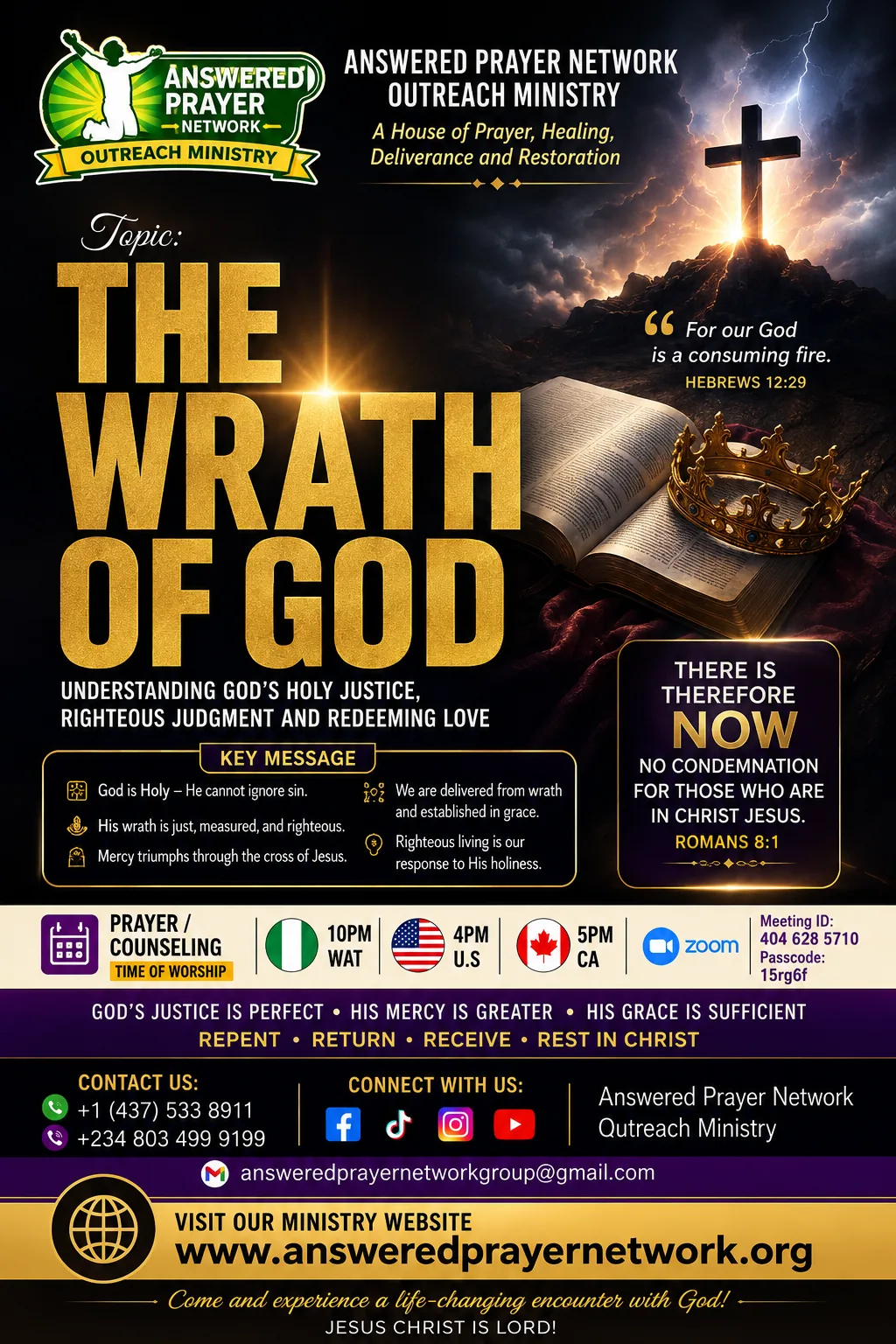
The phrase "the wrath of God" is one of the most misunderstood doctrines in Christianity. To many, it evokes images of an angry deity whose rage is unpredictable and harsh. Yet the Scriptures reveal something profoundly different. God's wrath is not the uncontrolled anger of a wounded man; it is the holy, righteous, and perfect response of a holy God to all that corrupts His creation. His wrath is not born from hatred but from holiness, not from cruelty but from justice, and never from selfishness but from His perfect love for righteousness.
To understand God's wrath, we must first understand God's character. "God is love" (1 John 4:8), yet the same God is described as "a consuming fire" (Hebrews 12:29). These truths do not contradict one another. His love defines His heart, while His wrath reveals His uncompromising holiness. Because God is infinitely holy, He cannot ignore sin. Because He is infinitely just, He cannot excuse evil. Because He is infinitely loving, He acts to destroy everything that destroys the people He created.
The wrath of God is not an emotional outburst but His settled, righteous opposition to sin. Human anger is often impulsive, vindictive, and tainted by pride. God's wrath is measured, deliberate, pure, and perfectly just. Every act of divine judgment in Scripture flows from His moral perfection. He never punishes unjustly, never acts without cause, and never judges apart from truth.
Throughout the Bible, God's wrath is revealed only after extraordinary patience. Before the flood in Noah's day, humanity had filled the earth with violence and corruption, yet God waited while Noah preached righteousness. Before the destruction of Sodom and Gomorrah, God listened to Abraham's intercession and would have spared the cities for the sake of a small number of righteous people. Before the fall of Jerusalem, God sent prophet after prophet, pleading with His people to repent. Again and again, mercy preceded judgment.
This reveals an essential truth: God's wrath is His strange work, but mercy is His delight. He is "slow to anger and abounding in steadfast love" (Exodus 34:6). The Lord does not delight in the death of the wicked but desires that they turn from their ways and live (Ezekiel 33:11). Judgment comes only when grace has been persistently rejected.
The greatest display of God's wrath was not poured out upon the sinful world—it was poured out upon Jesus Christ at the cross. There, the Son of God willingly bore the judgment humanity deserved. Every sin, every act of rebellion, every violation of God's holiness was laid upon Christ. At Calvary, justice and mercy embraced. God's wrath against sin was satisfied, and His love for sinners was fully revealed.
The cross declares that God takes sin so seriously that it required the death of His own Son. Yet it also proclaims that His love is so immeasurable that He Himself paid the price for our redemption. Without understanding God's wrath, we cannot fully appreciate God's grace. Grace is amazing because judgment was real.
For believers, this truth brings profound comfort. Through faith in Christ, we are no longer objects of divine wrath but recipients of divine mercy. "There is therefore now no condemnation for those who are in Christ Jesus" (Romans 8:1). The wrath we deserved has been exhausted at the cross. We now stand clothed in the righteousness of Christ, adopted as sons and daughters, reconciled to the Father through His blood.
Yet the doctrine of God's wrath remains a solemn warning to every generation. Our culture often celebrates sin, mocks holiness, and treats God as indifferent to evil. Scripture declares otherwise. A day is coming when Christ will return to judge the living and the dead. Every hidden motive will be exposed, every injustice will be addressed, and every knee will bow before the King of kings. For those who reject His mercy, His judgment will be unavoidable. For those who trust in Him, that day will be the glorious fulfillment of redemption.
The wrath of God should never produce despair in the believer; it should produce reverence, gratitude, and holy living. Knowing what Christ endured for our salvation compels us to hate sin, pursue holiness, and proclaim the gospel with urgency. We do not preach God's wrath to frighten people into religion; we proclaim it so that people may understand the immeasurable greatness of God's mercy revealed in Jesus Christ.
In the end, the wrath of God is not the final word. The final word for all who believe is grace. Beyond judgment stands the cross. Beyond justice stands mercy. Beyond condemnation stands forgiveness. The God who judges sin is the same God who stretches out His hands and invites every sinner to come home.
"For God has not destined us for wrath, but to obtain salvation through our Lord Jesus Christ." — 1 Thessalonians 5:9
May we never trivialize God's wrath, nor presume upon His grace. Instead, let us stand in awe of His holiness, rejoice in His mercy, and live lives that honor the One who loved us enough to bear our judgment so that we might share His eternal life. Amen.